

When the Streetlights Came On

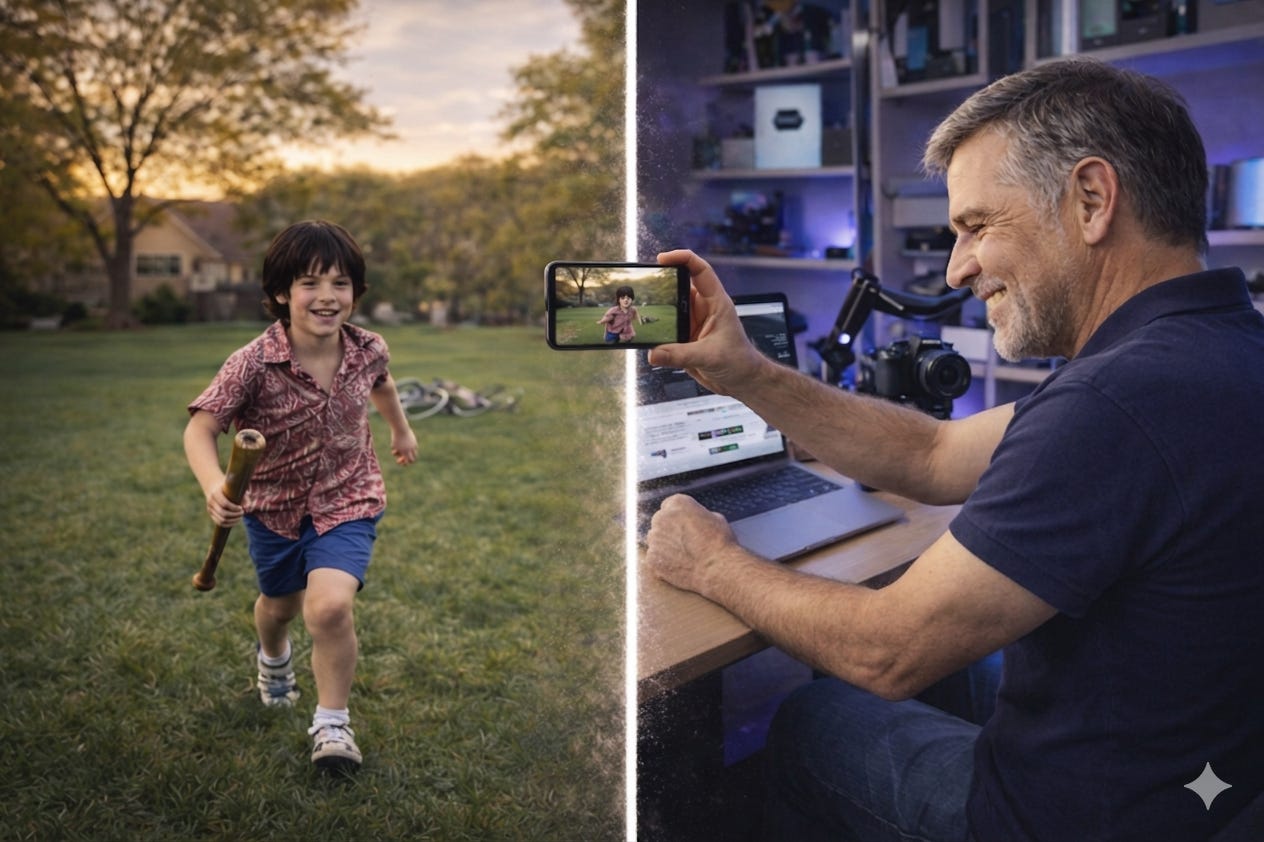
I watched a short video the other day that made me stop scrolling.
It shows kids from the 1990s reacting to what life might be like in the future. Except the future they’re talking about… is the world we live in now.
They hear that people stare at a little box all day.
That music isn’t something you own anymore—you just pay every month to borrow it.
That strangers deliver your food if you tap an app.
One of the kids finally asks a question that lands harder than the rest:
“So nobody ever just sits with the quiet?”
As someone who grew up in the 1970s, that line hit me a little differently.Then another line comes at the end.
“Do we at least still stay outside until the streetlights come on?”
That one stayed with me.
Because I’m old enough to remember exactly what that meant.
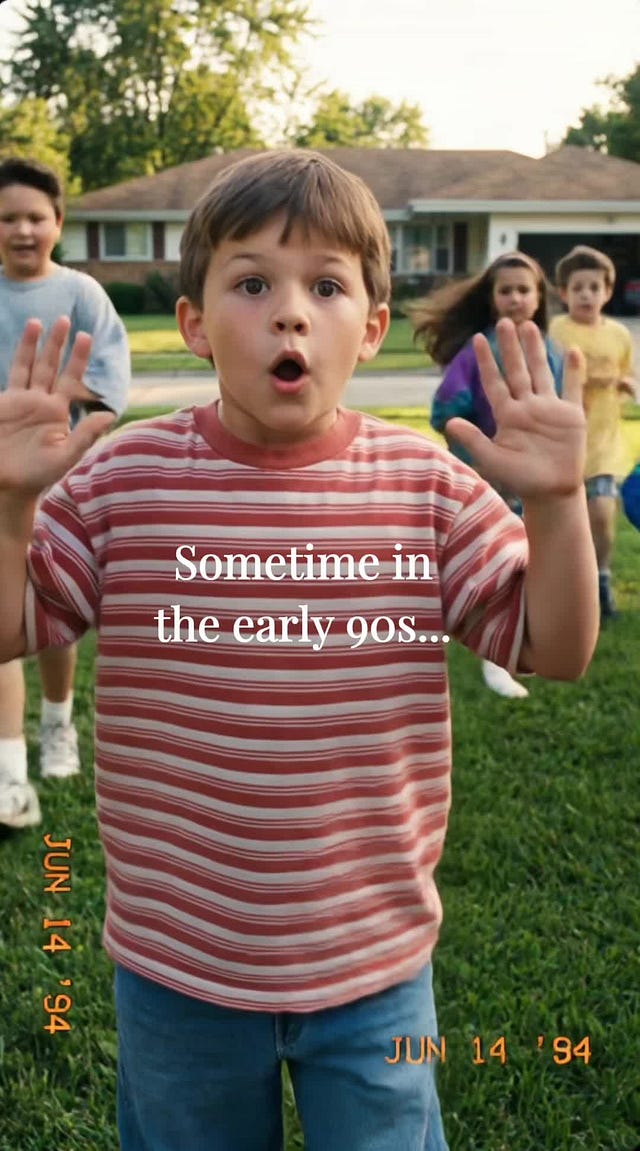
 Tiktok failed to load.
Enable 3rd party cookies or use another browser
Growing Up Before Everything Was Connected
I grew up in the 1970s.
Phones were attached to walls. If the cord stretched into another room, that was considered luxury.
If you got lost while driving somewhere, you either carried a paper map or you figured it out. Sometimes both.
Music wasn’t streamed. It lived on vinyl records and cassette tapes. You owned it physically. If you liked an album, you played it until the grooves practically wore out.
And when dinner was ready, someone yelled your name out the back door.
The signal that the day was officially over came when the streetlights came on.
That was the universal curfew for kids in the neighborhood.
Streetlights meant bikes went back in garages. Baseball games wrapped up. Everyone headed home.
There were no notifications waiting. No endless feed to scroll.
Just the quiet closing of a day.
Curiosity Before the Internet
Long before the internet became the center of daily life, curiosity looked a little different.
When I was a kid, I got my hands on a TRS-80 computer. It wasn’t connected to anything. No web. No cloud. Just a machine sitting on a desk waiting for someone curious enough to make it do something interesting.
So I started teaching myself BASIC.
I typed a few lines of code and watched the computer respond.
The first time it printed “HELLO JOEL” back at me on the screen, it felt like magic.
Not because it was sophisticated technology.
Because it was a conversation with a machine that hadn’t existed a moment earlier.
That sense of wonder, machines talking back, pulled me down a path I’ve been walking ever since.
But the world around me still looked very analog.
Kids rode bikes.
People knocked on doors.
And the loudest piece of technology in the house was usually the television.
When Generations Grow Up in Different Worlds
Every generation grows up with a slightly different version of reality.
But sometimes history speeds up.
When that happens, people born only a few years apart can experience childhood in completely different worlds.
Take the Great Depression.
People born in the early 1910s spent their childhood in relative prosperity. Those born just a decade later came of age during economic collapse, rationing, and survival.
The mindset of those two groups was completely different.
Or consider the years surrounding World War II. Entire technologies, commercial aviation, television, interstate highways, appeared within one generation and reshaped everyday life.
Something similar happened again in our lifetime.
The dividing line wasn’t a war or an economic crash.
It was the internet.
The Last Analog Childhood
People born roughly between the late 1960s and early 1980s lived through something unique.
We experienced childhood without the internet.
And adulthood with it.
We remember:
• maps in glove compartments
• busy signals on telephones
• waiting a week to see photos from a disposable camera
• getting directions from strangers at gas stations
And then, seemingly overnight, the world rewired itself.
Email replaced letters.
GPS replaced paper maps.
Music moved from shelves to servers.
Conversations moved from living rooms to comment sections.
Within a couple decades, the entire infrastructure of everyday life had quietly changed.
The Quiet That Disappeared
One line in that video keeps echoing in my mind.
“So nobody ever just sits with the quiet?”
Silence used to be normal.
Waiting used to be normal.
Boredom used to exist.
If you were standing in line somewhere, you looked around. Maybe you struck up a conversation. Maybe you just thought about things.
Now most empty moments get filled instantly.
A pocket-sized screen can eliminate boredom in about half a second.
Which is amazing, in a way.
But it also means something else quietly disappeared.
Space.
Space for imagination.
Space for reflection.
Space for wandering thoughts.
The kinds of thoughts that used to show up when nothing else was competing for attention.
The Loneliness Paradox
Another line from the video is almost ironic.
“Everyone’s connected to everything and people are still lonely.”
It sounds funny coming from a fictional kid from the 1990s.
But it’s also one of the strange contradictions of the modern world.
We’ve built the most connected society in human history.
Billions of people can talk instantly across continents.
And yet loneliness statistics keep climbing.
Technology solved distance.
It didn’t automatically solve belonging.
The Speed of Change
What makes this moment in history feel so unusual is the speed.
In the span of about thirty years we moved from a largely analog lifestyle to a fully digital one.
The tools changed.
The rhythms of life changed.
Even the way we think about time and attention changed.
If someone from the 1970s had watched that video predicting today’s world, it probably would have sounded like science fiction.
And yet here we are.
Photographing meals.
Streaming music we never physically own.
Asking a little device in our pocket where to drive next.
The Next Generational Shock
The funny thing is, the next generation may look at our habits the same way those kids in the video did.
They might wonder why we spent so much time staring at screens.
Why we treated smartphones like extensions of ourselves.
Why we shared so much of our lives publicly online.
Every era eventually looks strange from the outside.
Even the one we think of as normal.
When the Streetlights Came On
Sometimes when I watch videos like the one I saw this week, imagining our present through the eyes of kids from another era, I realize how quickly everything changed.
In the span of a few decades we went from bikes and baseball gloves to smartphones and algorithms.
From knocking on doors to messaging strangers.
From long quiet afternoons to a world where almost every moment can be filled.
And I can’t help wondering what a kid from the future will say when they look back at us.
What parts of our daily lives will seem strange to them.
What habits will look exhausting.
And whether they’ll ask the same question that kid asked in the video.
“Did people ever just sit with the quiet?”
Because once upon a time…
we did.
And it started when the streetlights came on.
P.S. If you grew up before the internet, what was the signal that the day was over where you lived?